
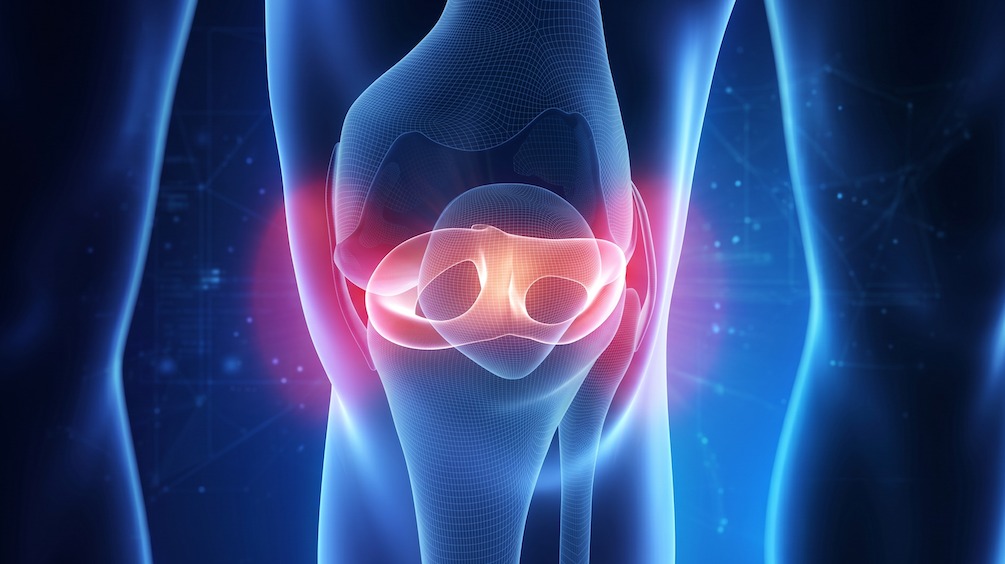
Padel may look like a less demanding racket sport, but the quick stops, sharp turns and lunges can put your knees under considerable strain. In this insightful article, physiotherapist Gerald Muller explores why knee injuries occur, what the research reveals, and how players can protect their joints through smart training, proper preparation and effective recovery. Because staying on court starts with looking after your body.
Padel is accessible, social and tremendous fun. But while its smaller court and underarm serve may make it appear less demanding than other racket sports, the movement requirements tell a different story.
Players repeatedly accelerate, stop suddenly, move sideways, lunge for low balls and turn to retrieve rebounds off the glass. These movements require the knees to absorb and redirect force, often in response to an unpredictable ball.
Padel is not inherently dangerous, but players need to prepare their bodies for the physical demands of the game.
What Does the Research Tell Us?
Although research into padel injuries is growing, the evidence remains more limited than for sports such as football, rugby and tennis.
A 2023 systematic review of eight studies involving 2,022 padel players reported approximately three injuries per 1,000 training hours and eight injuries per 1,000 matches. The elbow was the most frequently affected area, followed by the knee, shoulder and lower back.[1]
A 2025 review comparing padel, tennis and squash found that the knee accounted for approximately 15–23% of reported padel injuries in studies providing anatomical details.[2] A Portuguese study published in 2025 found that 12.5% of reported injuries affected the knee, while an Italian study of recreational players recorded 16 knee injuries among 85 injuries overall.[3,4]
These figures describe the proportion of recorded injuries, not an individual player’s probability of developing a knee problem. Although findings vary between studies, the evidence consistently identifies the knee as one of the important injury sites in recreational padel. Fatigue and overload are also recognised contributing factors.
Why Does Padel Challenge the Knee?
The knee works together with the foot, ankle, hip and trunk to absorb force, control movement and help players recover after each shot. Several aspects of padel place demands on this system.
- Rapid acceleration and braking: Players often sprint towards the net, stop within a few steps and immediately change direction. The quadriceps, hamstrings, calf and gluteal muscles must work together to slow the body while maintaining control of the knee.
- Repeated changes of direction: Turning while the foot remains planted can increase rotational stress through the knee, particularly when the player reacts suddenly to a ball rebounding off the glass.
- Lunging for low balls: Reaching forwards or sideways requires strength and control through a large range of knee movement. Poor conditioning can make it harder to maintain control and push back into position.
- Fatigue and repeated play: Hundreds of stops, turns and lunges can accumulate during matches and across a busy playing week. As fatigue develops, movement control may deteriorate. Players who rapidly increase from occasional games to several sessions a week may also progress faster than their muscles and tendons can adapt.
Which Knee Problems Can Occur?
Padel-related knee conditions generally fall into two categories: gradual-onset overload problems and sudden traumatic injuries.
Patellofemoral pain is felt around or behind the kneecap and may worsen with squatting, lunging, climbing stairs or repeated knee bending. It can reflect a mismatch between the demands placed on the knee and its current capacity. Increased playing frequency, reduced strength and inadequate recovery may contribute.
Patellar or quadriceps tendinopathy affects the tendons below or above the kneecap. Pain may occur during push-offs, jumps, landings or rising from a low position. Symptoms may ease during warm-up but return later in the match or the following morning. Management generally involves adjusting aggravating activity and progressively rebuilding tendon capacity rather than relying on prolonged complete rest.
Meniscal injuries can occur when a player twists over a planted foot or moves into a deep, loaded knee position. Symptoms may include joint-line pain, swelling, clicking or difficulty fully bending or straightening the knee. MRI findings must be interpreted alongside symptoms and clinical examination, as not every meniscal abnormality causes pain.
Ligament injuries may result from a sudden pivot, awkward landing or forceful change of direction. An anterior cruciate ligament (ACL) injury can occur during these movements, but current research does not establish how frequently ACL injuries occur compared with other padel-related knee conditions. A popping sensation, rapid swelling or instability warrants assessment.
Pre-existing osteoarthritis does not automatically mean a player must stop playing. Exercise can benefit joint health, strength and wellbeing. However, increasing pain or swelling from session to session may indicate that playing load, recovery or conditioning needs adjustment.
Can Knee Injuries Be Prevented?
No programme can prevent every injury, particularly when slips or unpredictable movements are involved. However, players can reduce risk by improving physical capacity and managing their playing load.
There is currently no high-quality clinical trial proving that a particular warm-up prevents knee injuries specifically in padel. The following recommendations combine emerging padel research with established evidence from tennis and other multidirectional sports.
1. Build strength off the court
Playing padel improves fitness, but it may not provide sufficient progressive strength training. A balanced programme should target the quadriceps, hamstrings, gluteal muscles and calves. Useful exercises include squats, split squats, lunges, step-ups, controlled step-downs, calf raises, hamstring bridges and single-leg balance exercises.
Two strength sessions per week can be a sensible target, adjusted to the player’s age, experience, injury history and playing schedule.
2. Train your brakes, not just your acceleration
Practise controlled forward and lateral movements, learning to lower your body, maintain control and stop in a balanced position. Progress gradually towards faster and more reactive changes of direction. Effective movement involves coordinating the foot, knee, hip and trunk rather than forcing the knee into one fixed position.
3. Increase playing time gradually
Moving suddenly from one casual game a week to several competitive matches gives the body little time to adapt. Increase playing frequency, duration or intensity progressively, rather than changing everything at once. Previous fitness from running, cycling or gym training does not necessarily prepare players for padel’s specific braking and rotational demands.
4. Use an active warm-up
An effective warm-up should raise body temperature and prepare the movements required during a match. An 8–10-minute routine could include light jogging, side shuffling, backwards movement, dynamic ankle and hip mobility, body-weight squats, controlled lunges, single-leg balance, progressive accelerations and stops, and increasingly fast practice strokes.
Begin with general movement before progressing to padel-specific actions. Stretching alone is unlikely to prepare the body for these demands.
5. Choose appropriate footwear
Shoes should fit comfortably, provide stability and suit the court surface. Insufficient grip may contribute to slipping, while excessive grip could prevent the foot from rotating or releasing during a turn. Research is not yet strong enough to identify a particular sole pattern or shoe design as proven to prevent knee injuries.
When Should You Seek Help?
Seek professional assessment if you experience significant twisting pain with a pop, rapid or marked swelling, repeated instability, true locking, difficulty straightening the knee, difficulty bearing weight or persistent pain that worsens with each match or affects everyday activities.
A physiotherapist can assess the knee, strength, balance and movement control, then develop an appropriate treatment and rehabilitation plan. If a more serious injury is suspected, they can arrange referral for medical review or appropriate imaging.
Seeking help does not necessarily mean stopping padel completely. Playing exposure may be temporarily modified while strength, movement control and the knee’s capacity are restored.
The Final Word
Padel offers valuable physical, social and psychological benefits, and knee pain should not discourage people from enjoying the sport. However, its physical demands should not be underestimated.
Strengthen your legs, practise stopping and changing direction, increase playing time gradually and respond early to persistent symptoms. Preparing off the court can help you remain confident and competitive on it.
Don’t just prepare to hit the ball — prepare your body to stop, turn and recover.
References:
- Dahmen J, Emanuel KS, Fontanellas-Fes A, et al. Incidence, prevalence and nature of injuries in padel: a systematic review. BMJ Open Sport & Exercise Medicine. 2023;9:e001607. doi:10.1136/bmjsem-2023-001607.
- King C, Smith L, Morris-Eyton H. A systematic review comparing epidemiology of injuries in padel, tennis and squash players. Central European Journal of Sport Sciences and Medicine. 2025;50(2):53-68. doi:10.18276/cej.2025.2-05.
- Ferreira RM, Fernandes LG, Campos LD, Goncalves RS. Sport-related injuries in Portuguese padel practitioners and their characteristics. Medicina. 2025;61(9):1707. doi:10.3390/medicina61091707.
- Tagliafico AS, Torri L, Righetto R. Injuries in non-professional padel tennis players: results of a survey of the Italian Federation of Tennis in Liguria, Italy. Journal of Sports Medicine and Physical Fitness. 2023;63(4):566-569. doi:10.23736/S0022-4707.22.14280-5.
- Castillo-Lozano R, Casuso-Holgado MJ. Incidence of musculoskeletal sport injuries in a sample of male and female recreational paddle-tennis players. Journal of Sports Medicine and Physical Fitness. 2017;57(6):816-821. doi:10.23736/S0022-4707.16.06240-X.
- Giustino V, Figlioli F, Patti A, et al. Injuries in padel players: what is known? A scoping review. International Journal of Sports Science & Coaching. 2024;19(3):1286-1295. doi:10.1177/17479541231191739.
- Shirodkar K, Siddi Ganie I, Saran S, et al. Padel tennis: spectrum of injuries and the role of radiological imaging. South African Journal of Radiology. 2026;30(1):a3506. doi:10.4102/sajr.v30i1.3506.
Gerald Muller qualified in physiotherapy at the University of Cape Town in 2003 after completing his first degree at Nelson Mandela Metropolitan University. With postgraduate training in Sports Physiotherapy, his career has included work at UCT’s Sports Injuries Centre, 16 years with Bishops College, and extensive pitch-side experience with sports teams locally and abroad.
Passionate about personalised care, Gerald believes effective rehabilitation goes beyond treating an injury — it’s about restoring confidence, movement and quality of life. An endurance and multi-sport enthusiast himself, he understands the importance of staying active and enjoying the sports you love.